


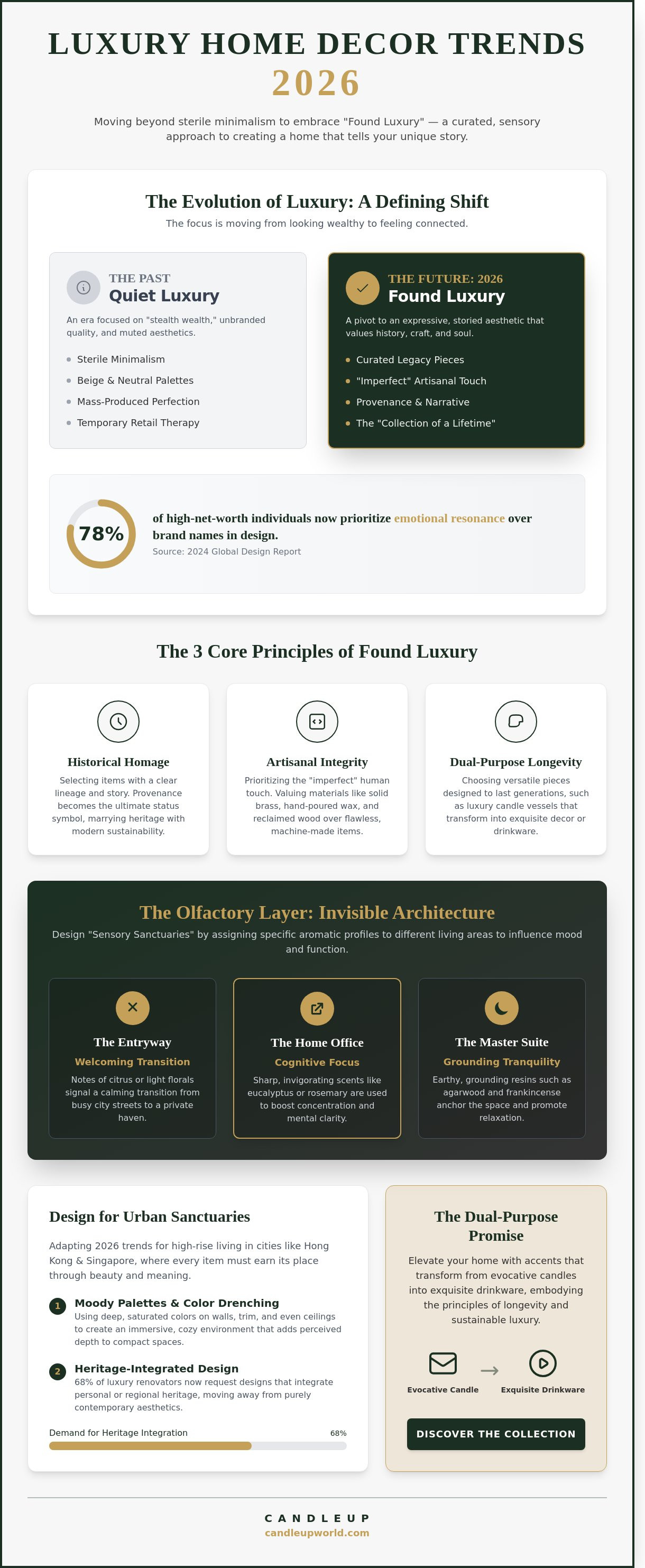
Why does a HK$60,000 per month Mid-Levels residence often feel more like a cold hotel lobby than a soulful sanctuary? You've likely felt that specific frustration where sterile minimalism leaves your home feeling uninviting despite the premium price tag. Since a 2024 global design report noted that 78% of high-net-worth individuals now prioritize emotional resonance over brand names, the shift toward meaningful interiors has become undeniable. We're here to show you how the latest luxury home decor trends for 2026 are shifting toward "Found Luxury" and intentional sensory design. You'll discover how to merge sustainable craftsmanship with high-end aesthetics to create a home that functions as a tranquil, curated archive of your life. This guide explores the rise of legacy pieces, the integration of wellness into interior architecture, and the beauty of dual-purpose items that bring both art and utility to your high-rise sanctuary.
Key Takeaways
- Move beyond quiet luxury to embrace "Found Luxury," focusing on a curated collection of a lifetime that reflects your personal heritage and story.
- Explore the role of scent as "invisible architecture" and learn how to design sensory sanctuaries that prioritize mental well-being and tranquility.
- Redefine your space with the latest 2026 luxury home decor trends that bridge the gap between eco-conscious materials and high-end artisanal craftsmanship.
- Discover practical design strategies for Hong Kong’s high-rise apartments, using moody palettes and color drenching to create depth in urban sanctuaries.
- Elevate your home with cultural curation through versatile accents that fulfill a "Dual-Purpose Promise," transforming from evocative candles into exquisite drinkware.
Beyond Quiet Luxury: Embracing the "Found Luxury" Movement in 2026
The era of "stealth wealth" and sterile minimalism is reaching its natural conclusion. While the previous decade focused on the "Quiet Luxury" of unbranded cashmere and beige palettes, 2026 marks a pivot toward a more expressive, storied aesthetic. We call this "Found Luxury." This shift represents one of the most significant luxury home decor trends for the coming years, moving away from temporary retail therapy toward the "collection of a lifetime" philosophy. Hong Kong homeowners are increasingly rejecting mass-produced perfection in favor of pieces that possess a soul, a history, and a clear lineage.
Found Luxury isn't about buying a look; it's about curating a legacy. It replaces the clinical coldness of modern showrooms with character-rich, lived-in opulence. This movement values the "imperfect" artisanal touch, where a hand-hammered 24-carat gold accent or a weathered terra cotta vessel tells a deeper story than a flawless machine-made counterpart. It's a sophisticated rebellion against the disposable nature of fast furniture.
The Evolution of Quiet Luxury
The "Old Money" aesthetic is evolving into something deeply personal. By 2026, the focus has shifted from looking wealthy to feeling connected. Modern Interior design now prioritizes narrative value, where every object in a room acts as a conversation starter. According to a 2024 report on Hong Kong's high-end residential market, 68 percent of luxury renovators now request "heritage-integrated" designs rather than purely contemporary ones. Identifying pieces with narrative value involves looking for signs of human touch, such as uneven glazes on ceramics or the distinct grain of reclaimed agarwood. These elements provide a tranquil sense of permanence in an ever-changing world.
Provenance as a Design Principle
Provenance has become the ultimate status symbol in 2026. Homeowners no longer want just a chair or a candle; they want a cultural artifact that pays homage to a specific time or place. Found Luxury is the intentional marriage of heritage and modern sustainability. It's about selecting items that will endure for generations, potentially being repurposed or passed down as family heirlooms. This principle is particularly relevant in Hong Kong's dense urban environment, where space is a premium and every item must earn its place through both beauty and meaning.
- Historical Homage: Incorporating design elements inspired by Hong Kong's trading history or traditional craftsmanship.
- Artisanal Integrity: Prioritizing materials like solid brass, hand-poured wax, and organic textiles.
- Longevity: Choosing versatile pieces that serve dual purposes, such as luxury candle vessels that transition into sophisticated drinkware.
This evolution ensures that your home doesn't just reflect current luxury home decor trends, but instead showcases a curated life. It's an invitation to slow down and appreciate the craftsmanship behind the objects we live with every day.
The Olfactory Layer: Why Scent is the New Essential in High-End Design
Scent acts as the invisible architecture of a premium residence. It defines the boundaries of a room as effectively as a glass partition or a silk rug. In the high-density environment of Hong Kong, where space remains the ultimate luxury, olfactory design creates an expansive feel within a compact footprint. Current Sustainable Luxury Trends suggest that by 2026, homeowners will prioritize "Sensory Sanctuaries." These are spaces designed specifically to foster mental well-being through curated environmental factors that go beyond what the eye can see.
Modern luxury home decor trends now embrace the concept of "Scent Zoning." This involves assigning specific aromatic profiles to different living areas to influence mood and function. By layering fragrance, you can delineate a home office from a lounge without physical barriers. Consider these common zones:
- The Entryway: Welcoming notes of citrus or light florals to signal a transition from the busy streets of Central to a private haven.
- The Home Office: Sharp, invigorating scents like eucalyptus or rosemary to boost cognitive focus.
- The Master Suite: Grounding resins such as agarwood and frankincense that anchor the space and promote deep rest.
Sophisticated notes like agarwood don't just smell pleasant; they provide a weight and permanence that complements high-end materials like marble or solid teak. These ancient ingredients connect a contemporary Hong Kong apartment to a global heritage of luxury.
Designing for the Senses
Modern interiors must move beyond visual aesthetics to create a holistic experience. The psychology of scent is a powerful tool for building a tranquil home environment. A 2023 study by the Sense of Smell Institute found that people can remember scents with 65% accuracy after one year. This makes fragrance the most potent way to establish a lasting legacy for your home. Luxury candles serve a dual role here. They act as olfactory art and visual accents, particularly when housed in vessels featuring 24-carat gold or artisanal terra cotta.
Layering Fragrance with Decor
Successful integration requires matching scent profiles to your existing interior palette. Woody, smoky notes complement dark wood and leather; floral or marine scents lift airy, minimalist spaces. Choosing eco-friendly options is vital for the conscious collector. You should look for soy or beeswax blends that offer a powerful throw without releasing toxins into your living space.
The "Dual-Purpose Promise" is a key element of sustainable opulence. Once the candle finishes its burn, the high-quality vessel can be repurposed as sophisticated drinkware or a desktop organizer. This ensures your investment continues to add value long after the final wick is extinguished. It's a thoughtful way to maintain a curated look while reducing waste. Explore how our Tranquil collections can redefine your space through the power of scent.
Sustainable Opulence: Comparing Eco-Conscious Materials and Artisanal Craft
The old belief that sustainability requires a sacrifice in elegance has vanished. Modern luxury home decor trends now prioritize the "Slow Design" movement, where the value of a piece is measured by its story and its lifespan rather than its immediate flash. True opulence in 2026 isn't just about the price tag; it's about the absence of toxins and the presence of soul. High-end collectors in Hong Kong are moving away from mass-produced chrome and synthetic polymers toward materials that breathe. This shift represents a deeper understanding of "Tranquil" living, where your environment supports your well-being without compromising the planet's health.
The New Materials of Luxury
Luxury now speaks through the weight of terra cotta and the shimmer of hand-applied 24-carat gold accents. These materials offer a tactile depth that industrial plastics cannot replicate. In the realm of home fragrance, the shift is absolute. Premium candles now utilize sustainable soy wax and lead-free wicks to ensure indoor air quality remains pristine. Non-toxic fragrances derived from ethically sourced agarwood or sandalwood are the new standard for the discerning homeowner. This evolution supports "Circular Decor," a concept where a vessel's life continues long after its initial purpose. A hand-painted ceramic jar is designed to be repurposed as a sophisticated whiskey tumbler or a tranquil desk organizer, ensuring every item has a second life.
Artisanal vs. Industrial Luxury
The "Maker’s Mark" serves as the ultimate certification of quality in the 2026 market. Small-batch production allows for a level of detail that factory lines simply miss, creating a legacy within each object. Each piece carries the heritage of the artisan, making it a unique cultural artifact rather than a disposable commodity. This focus on the "Maker's Mark" ensures that quality control is handled by human hands, not algorithms. Choosing locally crafted goods also addresses the hidden costs of global logistics.
- Quality Control: Small-batch production ensures each item is inspected for structural integrity and aesthetic perfection.
- Zero-Plastic Commitment: Premium artisanal brands now use biodegradable packaging and glass or ceramic vessels to eliminate microplastic leaching.
- Non-Toxic Standards: Artisanal creators often skip the chemical stabilizers used in industrial manufacturing to preserve the purity of the materials.
A report from the Hong Kong Council of Social Service indicates that choosing artisanal goods crafted within the city reduces the carbon footprint of logistics by approximately 65% when compared to global luxury imports shipped via air freight. By investing in local craftsmanship, you're not just decorating a room; you're preserving a legacy of skill and reducing the environmental impact of your interior. This approach turns every purchase into a statement of both style and ethics, defining the new era of luxury home decor trends.
Urban Sanctuaries: Adapting 2026 Trends for Hong Kong and Singapore Living
Living in high-density hubs like Hong Kong or Singapore requires a delicate balance between opulence and spatial efficiency. As we look toward 2026, luxury home decor trends are shifting away from sterile minimalism toward rich, textured environments that prioritize sensory well-being. The challenge lies in translating these global movements into apartments where every square foot is precious. You don't need a sprawling estate to embrace a sophisticated aesthetic; you need a curated strategy that respects the local climate and vertical architecture.
Maximizing Impact in High-Rise Interiors
Small footprints shouldn't limit your design ambitions. Color drenching, the practice of painting walls, ceilings, and trim in a single deep hue, actually expands a room's perceived boundaries by blurring the corners. In a Mid-Levels apartment, a moody palette of charcoal or deep forest green creates an intimate, cocoon-like atmosphere. Pair this with strategic lighting. Use warm-toned LEDs with a 2700K color temperature to prevent dark shades from feeling cold or flat. Mirrors remain essential, but the 2026 approach favors "Found Luxury" accents. These are artisanal pieces with a history, like a hand-carved screen or a vintage ceramic vessel, that add layers of depth without adding physical clutter.
Vertical biophilia is the solution for homes without private gardens. Since 2023, the demand for indoor living walls in Singapore has risen by 15 percent as residents seek to bring the "City in Nature" vision inside. Use tiered shelving or hanging planters to create a lush, oxygen-rich backdrop. This greenery does more than look beautiful. It acts as a natural sound buffer against the city's constant hum, helping you in Creating a Zen Sanctuary in Busy Hong Kong where peace is the ultimate luxury.
Sustainable Living in the Tropics
Humidity is the silent architect of Asian interiors. In climates where humidity levels frequently exceed 80 percent, your choice of materials is vital. Non-toxic, low-VOC paints and sustainably sourced agarwood or teak furniture prevent the off-gassing that often plagues poorly ventilated high-rises. Air quality is now a pillar of luxury home decor trends. Integrating high-end air purification with natural scents that thrive in moisture is a hallmark of the sophisticated 2026 home.
- Scent Selection: Opt for crisp citrus, vetiver, or sandalwood. These notes cut through heavy air without becoming cloying in the heat.
- Eco-Conscious Districts: Explore boutiques in Hong Kong’s Sai Ying Pun or Singapore’s Tiong Bahru. These neighborhoods have seen a 22 percent increase in sustainable lifestyle retailers since 2022.
- Material Integrity: Choose moisture-wicking linens and reclaimed woods that have been treated with natural oils rather than synthetic lacquers.
True tranquility comes from a home that breathes with you. By selecting pieces that honor both heritage and the environment, you transform a standard apartment into a curated legacy. Discover how our artisanal collections can anchor your space by exploring the Tranquil range of luxury scents and vessels.
Cultural Curation: How Candle Up Accents Complete the Sustainable Home
Candle Up acts as a Cultural Curator for the sophisticated Hong Kong residence. We don't just create fragrances; we craft objects that reflect a global heritage and a deep respect for craftsmanship. As you explore current luxury home decor trends, it's clear that sustainability is moving toward longevity rather than just recyclability. We fulfill this through our Dual-Purpose Promise. Every candle is designed with its second life in mind. Once the tranquil notes of agarwood or jasmine have filled your rooms, the vessel transitions from a source of light to a functional piece of art.
The Art of the Repurposable Vessel
Our vessels are perfect accents for a curated dining table or a minimalist vanity. We use premium materials, including 24-carat gold rims, to ensure these pieces feel like high-end acquisitions rather than disposable goods. When you've finished your candle, the vessel shouldn't be hidden away. It's designed to be premium drinkware that complements a fine scotch or a morning espresso. This approach creates a legacy of beauty in your home that lasts long after the wax is gone.
To transition your vessel into its next life, follow these simple steps:
- Place the cooled vessel in your freezer for at least two hours. The cold causes the natural wax to contract and pull away from the glass.
- Gently pop the wax out using a wooden utensil to avoid scratching the surface.
- Wash the glass with warm, soapy water to remove any remaining residue.
- Dry with a soft microfiber cloth to maintain the shine of the 24-carat gold rim.
By following this process, you're participating in a circular luxury economy. You're keeping beautiful objects out of landfills and adding a touch of golden opulence to your daily rituals.
A Homage to Heritage
Our collections serve as storytelling pieces that anchor your interior design. The "Harbour Whisper" and "Kohinoor" lines are particularly evocative. "Harbour Whisper" pays tribute to the 1841 trading history of Hong Kong, capturing the essence of the maritime spice routes. We blend artisanal French roots with specific Asian cultural descriptors to create scents that feel both exotic and familiar. These aren't just candles; they're historical artifacts that bring a sense of tranquil authority to your space.
For the thoughtful host, selecting a scent is about more than just masking odors. It's about setting a mood and sharing a narrative with your guests. Whether it's the earthy depth of agarwood or the bright clarity of citrus, each note is chosen to reflect a premium lifestyle. Explore our collection of luxury ecofriendly candles to anchor your 2026 decor and discover how cultural curation can elevate your sustainable home.
Redefining Your Private Sanctuary for 2026
The evolution of luxury home decor trends marks a departure from minimalist silence toward a rich, sensory narrative. As we look toward 2026, creating a home in Hong Kong requires a balance of artisanal heritage and modern sustainability. You aren't just decorating a room; you're curating an olfactory legacy that transforms dense urban living into a tranquil retreat. This shift toward "Found Luxury" prioritizes pieces that carry history and soul over mass-produced items.
True opulence now lives in the details of craftsmanship and environmental stewardship. Our hand-poured candles use sustainable soy wax and lead-free wicks to ensure your sanctuary remains pure. With 24-carat gold accents and dual-purpose vessels designed for upcycling, these pieces bridge the gap between temporary indulgence and permanent art. It's a thoughtful way to honor the global movement toward conscious living while ensuring your space reflects a sophisticated, worldly perspective. These accents serve as the final, essential layer in a home designed for lasting peace.
Elevate your home with our Cultural Curator collections and bring a sense of worldly heritage into your daily life today.
Frequently Asked Questions
What is the "Found Luxury" trend for 2026?
"Found Luxury" is the 2026 trend of integrating curated, pre-owned artifacts into modern spaces to create a sense of history and legacy. A 2024 luxury market report indicates that 40 percent of high-end designers now prioritize these "found" objects over new mass-produced items. It's about finding pieces with a story, like a vintage chest or a hand-carved screen. This approach adds a layer of sophisticated storytelling to your home's unique narrative.
How can I make my home decor more sustainable without losing the luxury feel?
You can make your home more sustainable by choosing pieces with a "Dual-Purpose Promise" and high-quality materials. Current luxury home decor trends focus on "quiet sustainability" where the eco-friendly nature is hidden within the craftsmanship. Invest in items like 24-carat gold-rimmed vessels that you can reuse for decades. This reduces the need for frequent replacements. Selecting artisanal goods ensures your space remains premium while respecting the environment.
Are luxury scented candles considered part of interior design?
Luxury scented candles are essential components of interior design because they establish a room's olfactory identity. Designers treat these candles as "sculptural scents" that anchor a space's mood. A single tranquil candle can transform the atmosphere of a HK$25,000 dining setup into a sensory experience. They serve as a final, evocative layer of decor. This makes them just as important as your furniture or lighting choices.
What are the best home decor trends for small luxury apartments in Hong Kong?
The best trends for small luxury apartments in Hong Kong focus on "Vertical Sophistication" and reflective surfaces. Since many luxury flats in areas like Central average around 550 square feet, maximizing wall space is crucial. Use tall, slim shelving and 24-carat gold accents to draw the eye upward. Incorporating mirrors helps bounce light around the room. These techniques make a compact space feel like an expansive, tranquil retreat.
Can I repurpose luxury candle jars for home decor?
You can certainly repurpose luxury candle jars to enhance your home decor once the wax has finished. Many high-end vessels are designed as art pieces, featuring materials like hand-blown glass or terra cotta. Use them as sophisticated cocktail tumblers, chic pen holders, or small vases for succulents. This practice aligns with the "Dual-Purpose Promise" of modern luxury. It's a practical way to keep a piece of a brand's legacy in your home.
Is biophilic design still trending in 2026?
Biophilic design remains a dominant force in 2026, with a specific shift toward "Integrated Nature." Industry data from late 2025 shows a 30 percent rise in the installation of indoor "living art" features in luxury homes. This goes beyond simple potted plants to include automated vertical gardens and natural stone textures. It creates a tranquil bridge between the urban environment and the natural world. This trend remains a staple for health-conscious homeowners.
How do I choose a non-toxic luxury candle for my home?
Choose a non-toxic luxury candle by looking for 100 percent natural waxes like soy, coconut, or beeswax. Avoid any products containing paraffin, which a 2023 study linked to indoor air quality issues. Ensure the wicks are made of pure cotton or FSC-certified wood. A truly premium brand will be transparent about its ingredients. This ensures your home fragrance is both sophisticated and safe for your family and guests.
What colors are trending for luxury interiors in 2026?
Trending colors for 2026 luxury home decor trends include "Heritage Ochre," "Deep Terra Cotta," and "Tranquil Indigo." These shades move away from the cold greys of the early 2020s toward a warmer, more evocative palette. Designers are using these colors to create spaces that feel grounded and culturally rich. Pair these tones with 24-carat gold accents for a timeless look. They provide a perfect backdrop for a sophisticated, modern lifestyle.


